
Orion NB-IoT
A meter that is managed, not just read
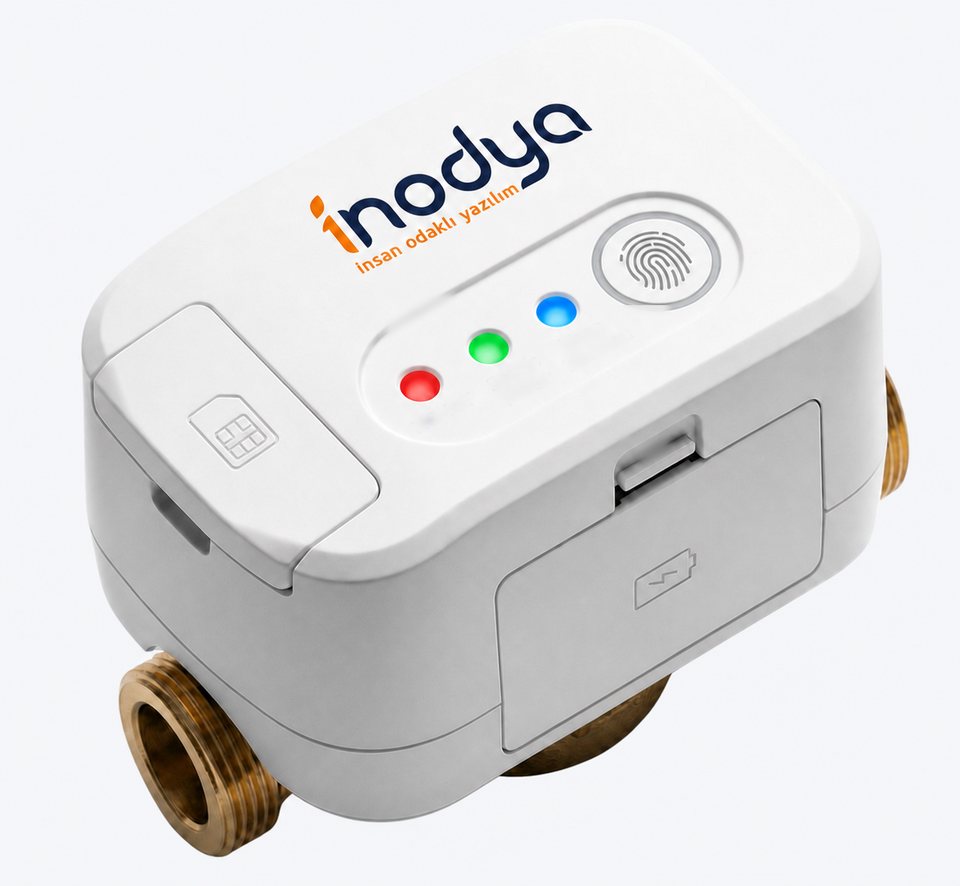
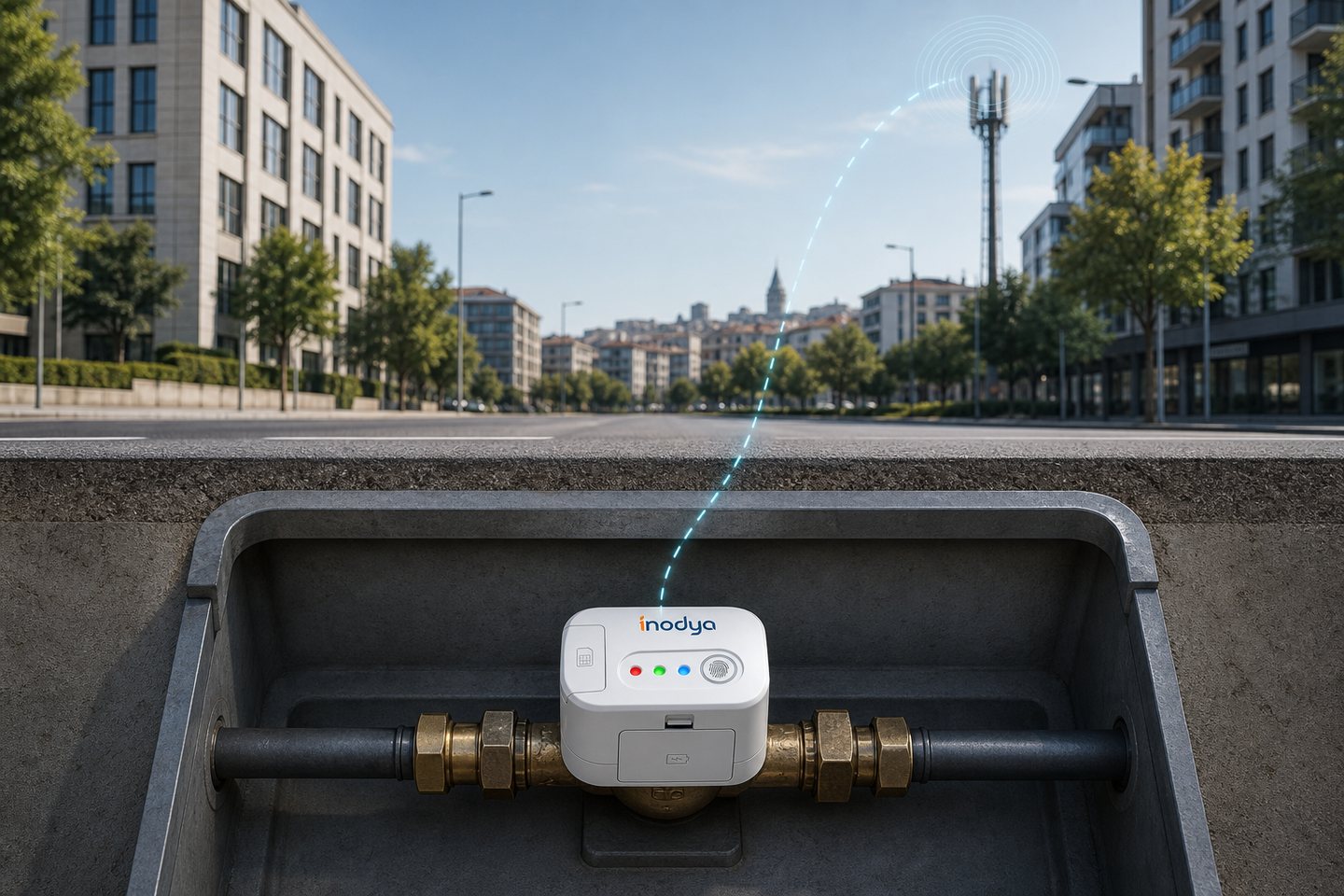
Orion NB-IoT is a smart water meter that communicates bidirectionally over cellular infrastructure, carries richer meter data, can be updated without a site visit and opens valve operations to control-room management.
PRODUCT SUMMARY
Retrofit approach, cellular connectivity, remote operation
The shared idea across the Orion family is an upper module that can work with existing mechanical meter infrastructure. The NB-IoT release adds cellular connectivity and remote device management on top of that approach.
- Direct connectivity over the operator network; no separate utility gateway or concentrator is installed.
- Bidirectional communication: the device does not only send data, it also receives commands and updates.
- Remote firmware management and configuration change.
- Authorised valve operation; every command and its result is reported traceably.
TECHNICAL SPECIFICATIONS
Capabilities verified today
The capabilities below have been verified by the product team. You can rely on these rows when writing a specification.
| Capability | Status | Scope |
|---|---|---|
| NB-IoT connectivity | Verified | 3GPP LTE Cat-NB profile. The module used, the supported band list and network test results are given in the technical file. |
| Remote firmware update | Verified | Rollouts run in stages. The package is signed and encrypted; thanks to the dual-bank layout the device keeps running on the pre-update version if the process is interrupted. |
| Richer data package | Verified | More fields and a more flexible transmission profile than the Sigfox version. Exact payload size and field list depend on configuration. |
| Local service access | Verified | Local on-site access over BConnect 2.4 GHz using the IWS Mobile application. |
| Valve control | Verified | Open/close plus intermediate throttling in 10% steps. The command sets the valve opening. On power loss the valve holds its last position. |
| Battery life | Verified | About 15 years at one transmission per day, about 6 years at four per day. Assumptions: high signal quality, one firmware rollout per year, −20 … +80 °C operating range. |
| On-device logging | Verified | Approximately 12,000 hourly, 1,200 daily and 200 monthly records, plus 4,000 event records. Logs can be read over NB-IoT or on site via BConnect. |
The band and operator matrix, ingress protection and metrological approvals, valve throttling levels and battery-life tables for a given transmission profile are shared per project together with the technical file. DLMS/COSEM is not present in the current release; it is on the next-release roadmap.
INSTALLATION AND COMMISSIONING
Six steps that make field work easier
Installation quality determines the next three years of data quality. The steps below are the shared method for pilot and rollout.
-
Site survey and coverage classification
Installation points are grouped into easy, medium and difficult coverage classes. Chamber depth, cover material and building structure are recorded.
-
SIM / operator profile preparation
Subscription, band profile and, if needed, roaming coverage for the target country and operator are settled before installation.
-
Mechanical mounting
Flow direction, fitting seal and service access are checked. The device should be positioned so battery and SIM servicing is possible without removing it.
-
Antenna placement
Antenna orientation and position follow the mounting guideline. At difficult points, alternative placements are tried and the best signal quality is recorded.
-
Activation and first data check
The device registers on the network, the first packet reaches the control room and signal quality is measured. The result is recorded per point in the installation log.
-
Acceptance and handover
Index reconciliation, valve state, device identity and customer matching are confirmed before the point is handed over to operations.
Where to go next
Why NB-IoT
A neutral decision framework comparing Sigfox, LoRaWAN and NB-IoT.
Device management
OTA rollout flow, staged expansion, interruption behaviour and rollout tracking.
Data
Data fields, transmission profiles, integration approach, data ownership and export.
Security
Controls verified today, support policy, conformity documents and roadmap.
NEXT STEP
Start by measuring in your own network
Let us validate the coverage, data, battery and integration assumptions together in a limited pilot. We write the success criteria before the pilot begins.